
When the last storm warning of the season came through, did your business know exactly whatto do?
Hurricane season is almost over. For most offices, that means a sigh of relief and a quick returnto normal. But the weeks right after the season are the best time to look back.
Memories are fresh. The weather is calm. And there’s time to fix what didn’t work before June comes around again. Here’s a simple debrief any Tampa Bay business can run before the end of the year
What Worked and What Didn’t in Your Continuity Plan
A continuity plan is your playbook for keeping the business running when something goeswrong. A debrief checks whether that playbook held up.
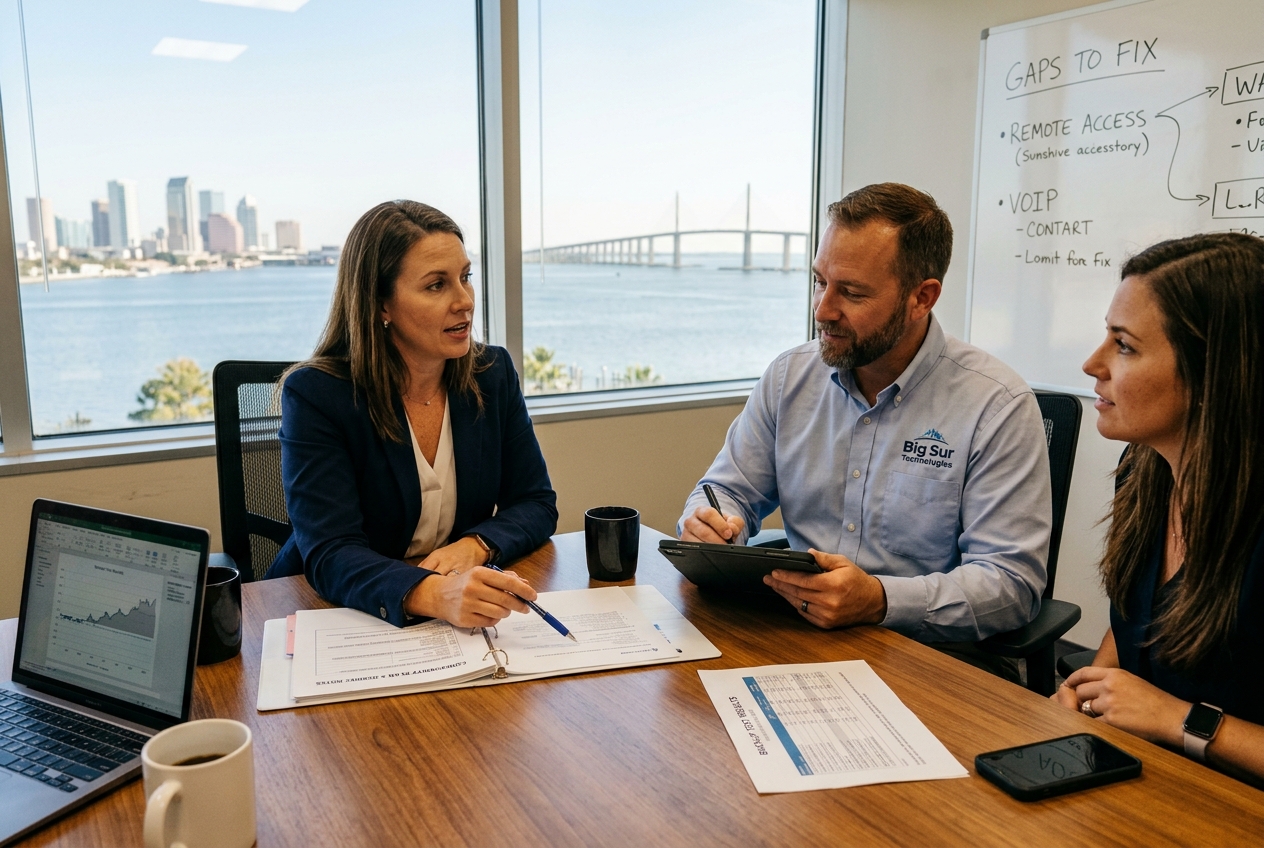
Gather your key people for an hour. Walk through each storm watch or warning that affectedyou this season. Ask simple questions. Did everyone know when to leave the office? Could staffreach emailand files from home? Did customers know how to reach you? Did anyone get stuckwaiting on a password or a missing laptop?
Write down what went well and what didn’t. Be specific. “Two people couldn’t log in remotely” ismore useful than “remote access was rough.”
If your area wasn’t hit hard, run the debrief anyway. A near miss is free practice.
The Florida SBDC Network encourages businesses to plan how they’ll keep operating after a disaster, including access to employee, customer and vendor records. Use that as a checklist. Could you reach every one of those records from somewhere other than your office?
The answers become your to-do list for winter.
How to Test Backups Before the Next Storm
A backup you’ve never restored is a guess. Testing turns it into a fact.
Start small. Pick a few files from different systems and restore them to a separate location. Open them. Make sure they’re complete and current. Then try something bigger, like restoring a full server or a shared drive to a test machine. Time how long it takes.
That time matters. Your recovery time objective, or RTO, is how long you can afford to be down. If a restore takes eight hours and you can only handle two, you’ve found a gap.
Check where your copies live, too. The 3-2-1 backup rule explained by the U.S. Chamber of Commerce calls for three copies of your data, on two types of media, with one copy off-site. For a Tampa Bay office, off-site should mean outside the storm’s path.
Big Sur’s backup and recovery service uses geographically redundant storage, runs multiple integrity checks each day and sets defined recovery time objectives. Testing confirms those promises hold up for your data
Which Gaps to Fix While the Weather Is Calm
Once you’ve finished the debrief and the backup tests, sort your findings into two piles. Quickfixes and bigger projects.
Quick fixes might include updating your emergency contact list, documenting who makes thecall to close the office or making sure every employee can sign in remotely. These take anafternoon.
Bigger projects take planning. Maybe your phones only work when someone’s sitting at a desk. A cloud-based VoIP business phone system lets calls follow your team to their laptops and mobile phones, so customers can still reach you when the office is closed. Maybe your servers sit in a closet with no off-site copy. Maybe laptops are overdue for replacement and won’t holdup on a long workday away from the office.
Don’t forget cyber risks. North Carolina’s state IT department recommends running at least one cyber-focused exercise each year, such as ransomware, alongside weather drills. Scammers often target businesses during disasters, when people are rushed and distracted.
Fix the quick items in November. Schedule the bigger ones for early next year.
Frequently Asked Questions
When does Atlantic hurricane season officially end?
The National Hurricane Center lists the official Atlantic hurricane season as June 1 through November 30. Storms can form outside those dates, so the end of the season isn’t a guarantee. Still, December through May is the best window for testing, upgrades and planning without a storm on the horizon.
How often should a business test its data backups?
Automated checks should run constantly, and your provider should confirm backups complete every day. Full restore tests should happen on a regular schedule, often quarterly. Test after major changes too, like a new server or software system. The goal is simple: prove you can get your data back, in the time you need, before you actually need it.
What is the difference between backup and disaster recovery?
A backup is a copy of your data. Disaster recovery is the plan and the tools for getting yourwhole operation running again after a major disruption. That includes restoring systems, gettingpeople connected and reaching customers. Backup is one piece of disaster recovery. You needboth, and they need to work together under pressure.
Fix the Gaps While the Skies Are Clear
Every hurricane season teaches something. The businesses that come back stronger are the ones that write the lessons down and act on them.
Your debrief doesn’t need to be complicated. Talk through what happened. Test your backups and time the restore. Sort the gaps into quick fixes and bigger projects. Then get them done before next June.
If you’re not sure where to start, that’s what a partner is for. Our help desk team can confirm remote access works for every employee. Our backup specialists can run a restore test with you and show you exactly how long recovery takes. And if you’re a small or mid-sized business without a full-time IT person, we can fill that role.
Big Sur Technologies has supported Tampa Bay organizations since 1999. We know what this region asks of a business every summer. Schedule a consultation and let’s turn this year’s lessons into next year’s plan.